
Adjika: The Iconic Georgian Seasoning at the Heart of a Culinary Tradition
- Mar 30
- 6 min read
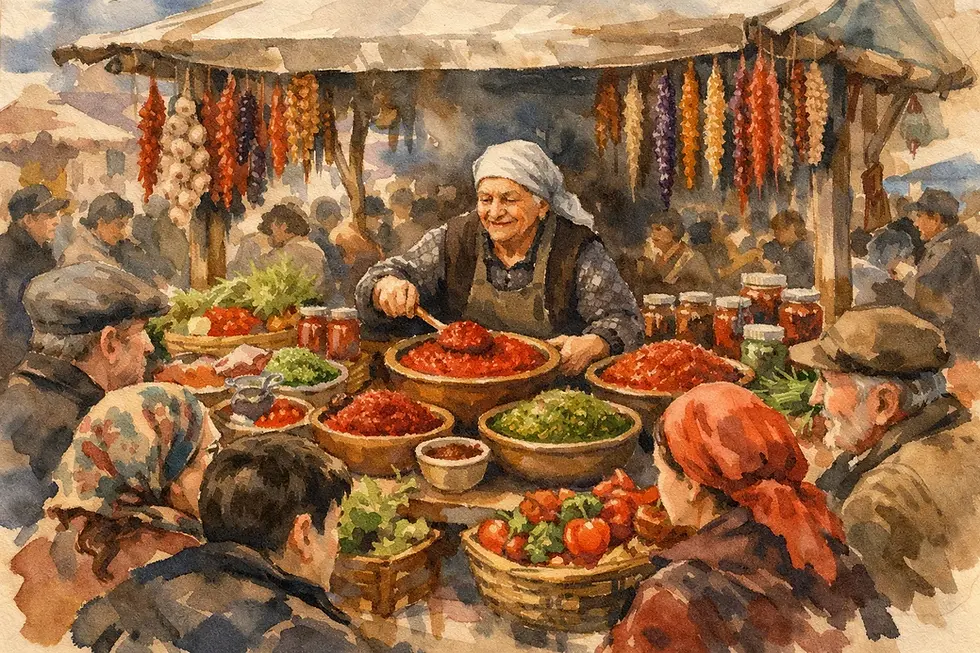
Adjika is far more than a condiment. It is one of the defining flavours of Georgian cooking, a seasoning with deep cultural roots, strong regional identity, and a lasting place in everyday food. Rich with chilli, garlic, herbs, and spices, adjika is loved not simply because it adds heat, but because it brings depth, aroma, warmth, and character to an enormous range of dishes.
To describe adjika as just a chilli paste would be to flatten something much more meaningful. In Georgia, adjika belongs to the wider story of how food preserves identity. It is a seasoning shaped by place, passed through generations, and woven into the rituals and rhythms of daily life. It appears at family tables, in home kitchens, in festive meals, and in local food traditions that continue to evolve while holding firmly to their roots.
That cultural importance is recognised in Georgia itself. Georgia’s official tourism platform states that ajika is so important to Georgian cuisine that it has been added to the country’s list of Monuments of Intangible Cultural Heritage. The same source also notes that the technology for making Abkhazian and Megrelian ajika was granted intangible cultural heritage status in 2018.
What is adjika?
Adjika is a Georgian seasoning traditionally made from chillies, garlic, salt, and spices, with variations that may also include herbs, walnuts, or seeds depending on the region and recipe. Some versions are red, some green, some smoother and more spreadable, others thicker and more rustic. Some are fiery, others more rounded and aromatic. What unites them is intensity of flavour and an unmistakable savoury-spiced identity.
Recipes are passed down from generation to generation and the core ingredients include red hot pepper, salt, garlic, dried spices, and blue febugreek, with the option to add walnuts, other nuts, seeds, and fresh or dried herbs. Green chillies are used for green versions.
Adjika isn't just hot. It is aromatic, complex, and deeply seasoned. It can be bold and fiery, but it can also be nutty, herbaceous, fresh, or mellow depending on the preparation.

Why adjika is so iconic in Georgian food culture
Every cuisine has a handful of ingredients that do more than season food. They communicate place. They signal familiarity. They tell a story about what people value in flavour. In Georgian cuisine, adjika is one of those ingredients.
It has earned that status because it is both deeply expressive and wonderfully practical. Adjika can be used in marinades, stirred into sauces, spooned alongside grilled meats, added to vegetables, folded through beans, brushed onto fish, or simply served at the table as a finishing condiment. It belongs to celebratory cooking, but it also belongs to ordinary life.
That everyday usefulness is one of the reasons it carries so much cultural weight. Adjika is not reserved for rare occasions or specialist recipes. It is woven into regular cooking, which means its flavour becomes part of memory. It is the sort of seasoning people grow up recognising instantly. The smell of crushed garlic and chilli, the warmth of spice, the way one spoon can transform a dish, all of that builds familiarity over time.
The Georgian tourism source puts this simply: ajika is “so crucial to Georgian cuisine” that it was added to the list of Monuments of Intangible Cultural Heritage. That statement captures something essential. Adjika is not admired from a distance. It is used, shared, and lived with.
A seasoning shaped by region
Part of what makes adjika so fascinating is that it is not a single rigid recipe. It is a family of preparations shaped by local practice, climate, ingredients, and tradition.
Ajika has long been prepared in Georgia, especially in relation to slightly different recipes in Abkhazia and Samegrelo, and that production in its various forms is now widespread throughout Georgia.
Many iconic foods begin in specific places before becoming widely loved across a country. In the case of adjika, those local identities remain important. Abkhazian and Megrelian traditions are both central to the broader story of ajika, and that layered regional history is part of what gives the seasoning such depth and resonance.
Regional variation also means that adjika is dynamic rather than fixed. One household may favour a hotter version, another a greener and more herb-led one. One cook may prefer walnuts for richness, another a cleaner, sharper chilli profile. These differences do not weaken the tradition. They are part of the tradition.
That is one of the hallmarks of living culinary heritage. It is recognisable, but not static. It has continuity, but also room to breathe.
What intangible cultural heritage means in food
The phrase “intangible cultural heritage” can sound formal, but in food terms it points to something beautifully human: knowledge and practices that are carried by people rather than by monuments. It includes techniques, customs, rituals, oral traditions, and forms of craftsmanship that communities recognise as part of their identity.
Food fits naturally into that idea. Recipes are taught and adapted. Techniques are demonstrated by hand. Flavours are remembered long before they are written down. A seasoning like adjika belongs in that world because it is not only about ingredients. It is about preparation, repetition, inheritance, and communal understanding.
Recipes are passed down orally or in writing from generation to generation - adjika is a tradition of making and knowing. When a food carries that kind of continuity, it becomes more than something edible. It becomes part of cultural memory.
The flavour identity of adjika
The reason adjika continues to travel so well beyond Georgia is simple: it tastes extraordinary.
Its flavour is layered rather than flat. Chilli gives warmth and brightness. Garlic adds savoury depth. Salt sharpens everything. Spices bring perfume and complexity. In some versions, herbs make it greener and fresher. In others, walnuts soften the heat and create a richer, rounder finish.
This is why adjika works across so many kinds of food. It can lift a simple bowl of beans, bring energy to roasted vegetables, cut through the richness of meat, sharpen grilled fish, or add backbone to soups and sauces. It can feel rustic and homely, but also modern and elegant depending on how it is used.
That versatility has helped adjika travel into contemporary cooking without losing its identity. It sits comfortably in traditional dishes, but it also works in grain bowls, crispy rice salads, butter bean flatbreads, or yogurt-based dips. It is one of those rare heritage ingredients that feels completely at ease in a modern kitchen.
Adjika as a bridge between tradition and modern cooking
One reason adjika has found new audiences is that it solves a very current cooking problem. People want bold flavour without complexity. They want ingredients with story, but they also want them to be practical. They want to cook in ways that feel fresh and contemporary while still connected to something real.
Adjika answers all of those desires at once.
A jar of adjika brings depth quickly. It shortens ingredient lists. It makes vegetables more compelling, eggs more exciting, chicken more interesting, and beans less ordinary. In an age where many cooks are searching for one ingredient that can transform a weeknight dinner, adjika feels completely at home.
Why adjika keeps its place
The foods and seasonings that last are usually the ones that become part of life rather than performance. They are not kept for display. They are reached for often. They find their way into everyday meals and become part of the flavour memory of a household.
That is exactly the kind of place adjika occupies.
It has endured because it is distinctive, but also practical. Traditional, but adaptable. Deeply rooted, but still relevant. It can be as at home beside grilled meat as it is folded into a modern spring recipe. That range is part of its power.
The more people understand adjika, the more obvious its importance becomes. It is not only a seasoning that tastes good. It is a seasoning that carries history, region, technique, and identity in every spoonful.
Adjika deserves to be recognised not simply as a condiment, but as one of the defining flavours of Georgian culinary culture. Its importance comes from more than taste alone. It comes from continuity, from regional tradition, from daily use, and from the way it connects people to a living food heritage.
That is what makes adjika iconic.
It is bold enough to transform a dish in seconds, yet rooted deeply enough to tell a much bigger story. It is a seasoning with both practical value and cultural weight, and that combination is rare. In a jar of adjika there is flavour, certainly, but there is also memory, craft, and the enduring spirit of a cuisine that knows exactly how powerful seasoning can be.


Comments